


Kraken Robotics (“Kraken”) is a business I have invested a good chunk of my time into these last couple months.
As a quick refresher, Kraken Robotics is a provider of subsea intelligence equipment including sonar, batteries and, since its Covelya acquisition, navigation and communications systems.
The Company is based in Newfoundland, Canada and its 3 main products are synthetic aperture sonar, the KATFISH towed vehicle that carries that sonar behind a ship or an uncrewed boat, and SeaPower batteries built to work under deep-sea pressure.
Kraken closed its C$615M acquisition of the UK’s Covelya Group this past July, and the combined company is guiding to C$290-320M of 2026 revenue and C$65-75M of Adj. EBITDA.
Covelya’s largest business is Sonardyne, which makes underwater positioning, navigation and communications systems, and the group also includes EIVA (software), Voyis (optical imaging), Chelsea Technologies (environmental sensors) and Forcys (naval defense systems).
But this article is not about Kraken — rather, it’s deep research into the industry they operate in, and the tailwinds and headwinds affecting growth into the 2030s.
It’s always nice when you find a company in the market that operates in an industry you think is fascinating.
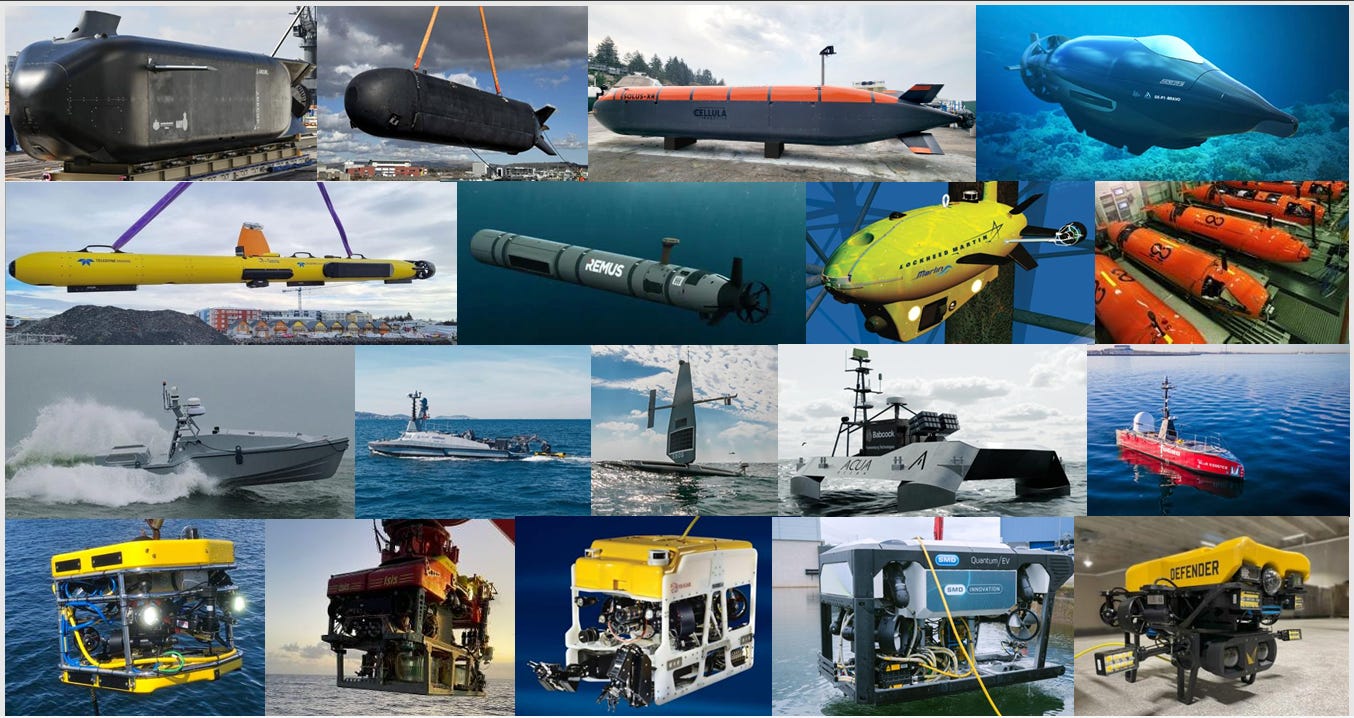
What’s cooler than sub-maritime robotics? Kraken provides solutions for:
Underwater drones.
Anti-submarine warfare.
Intelligence, surveillance and reconnaissance.
Mine countermeasures.
Subsea mining.
Subsea power and utilities.
Marine construction.
Asset integrity for key infrastructure.
—> Maybe it’s just me, but that’s cool shit.
Not only is the industry they operate in interesting to dig into, but I think this is a 10x opportunity in the making, if the Company continues to execute.
Defense budgets are rising across NATO, the UK and Canada, and some of that new capital spending is now being reserved for mine detection, drone construction, seabed monitoring and national security infrastructure underneath the waves.
Fleets for major NATO countries entered service in the 1980s-early 1990s, so navies are now modernizing their mine hunting fleets and transitioning from crewed minehunter ships to unmanned, autonomous vehicles.
Private investors and the big defense companies are paying up too, and Lockheed Martin, Thales and Fincantieri each announced an undersea acquisition this past July, around the same time of the Covelya acquisition closing.
The main risks are timing and valuation, since Congress still has not passed a full-year 2027 defense budget.
And defense stocks have sold off hard since mid-August.
On the commercial side, demand from oil & gas and subsea cables is smaller and steadier, while offshore wind is somewhat weak.
Overall, I do think uncrewed undersea systems will move from prototypes into real production orders in 2027-28, and global defense budgets should support this.
The biggest question is timing.
With that, let’s get into it.
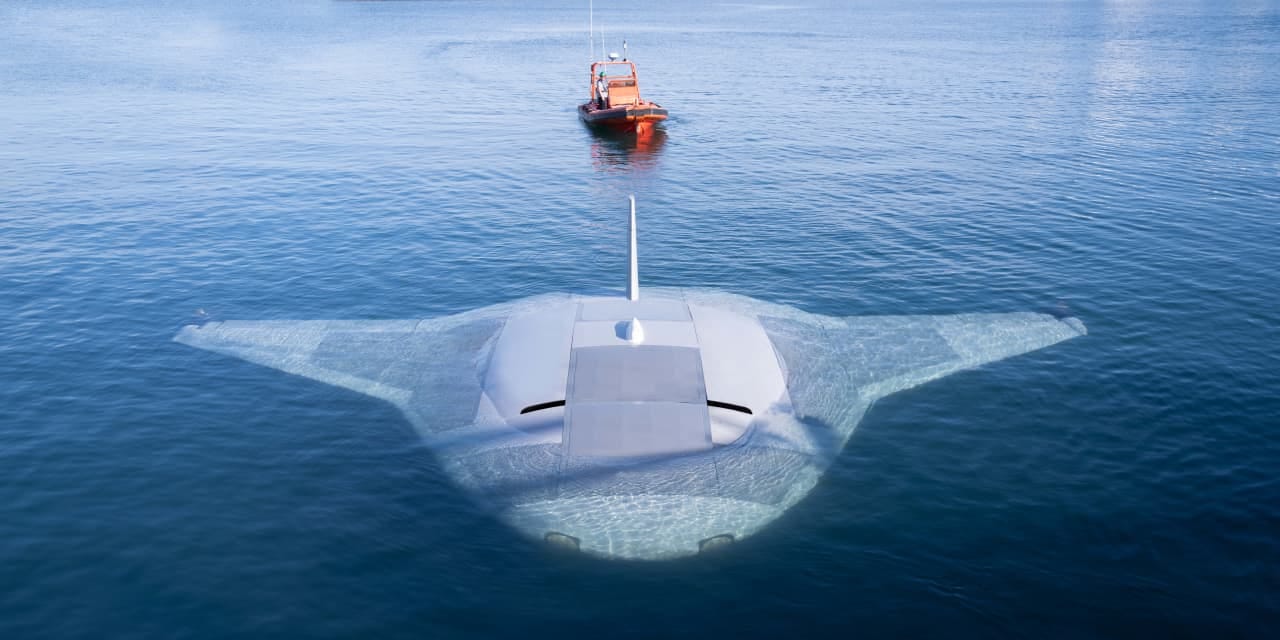
As always, I would really appreciate if you shared this post and subscribed to ThePrivatePublicInvestor, as I try my hardest each week to give you custom, in-depth analysis on stock investments and market insights.
With that, enjoy this piece and let me know if you have any questions!
Contents
Part 1
Why the ocean needs its own robots
How big is this market?
Why navies care about the seabed now
Who pays for it
Part 2 (Release date TBD)
What Hormuz showed about mine hunting
Big underwater drones and seabed sensors
Private money and M&A
What could slow this down
The commercial side
What this means for Kraken
1.) Why the Ocean Needs its Own Robots
👉🏼 It’s FREE to continue reading!!!
Just hit subscribe below 👇🏼